
Bilingual daycare in Zurich — pros, cons, and the right age to start
Whether bilingual daycare is worth it, when to start, what OPOL really means, and which language pairs Zurich actually offers — for expat families weighing options.
Bilingual daycare in Zurich — pros and cons
A bilingual daycare runs in two active languages across the day — not one English song at morning circle, but two language communities working in parallel. In Zurich, German-English (DE-EN) dominates; the city also offers DE-FR, DE-IT, DE-ES, DE-ZH and EN-FR with smaller supply. Is it worth it for your child? For most families, yes. Cognitive flexibility and a lasting second-language head start are well documented in the research, and despite a stubborn worry, studies consistently show no developmental delay — bilingual children build both languages in parallel and catch up on the initially smaller per-language productive vocabulary by around age five.
On timing, the research is clear and reassuringly forgiving for late deciders. Earlier is stronger: before age three is optimal because the brain treats both languages like two first languages, with native accent and native grammar intuition. Between three and five — the typical kindergarten entry — the effect is still strong. After five, bilingualism remains valuable, but acquisition slows down and becomes more conscious. On cost, the usual rules apply: in the city of Zurich, bilingual houses follow the city tariff model — typically CHF 130.– to CHF 160.– per day without subsidy, scaling with household income for subsidised places via kibon, with a floor around CHF 7.50 per day at the lowest-income end.
How "bilingual" actually works in practice
Three methods are common. It's worth asking each daycare which one they use before you apply.
The strictest is OPOL — One Person One Language. Every educator speaks her language consistently, ideally her mother tongue, with every child in every situation. The child quickly learns: "With Frau Müller I speak German; with Miss Smith I speak English." OPOL produces the cleanest language habits and is the gold standard in research and at experienced bilingual daycares.
The mixed method has every educator using both languages depending on situation, child or mood. It works, but it's softer: the child gets less unambiguous signal, and the line wobbles more when staff turn over.
The time-split method — German in the morning, English in the afternoon, or alternating by week — looks tidy but produces weaker results than OPOL. The child speaks to the same people in both phases, so no person-bound language identity forms. Most Zurich daycares that use the word "bilingual" seriously run on OPOL.
Strengths and honest weaknesses
The strengths are well documented and reach beyond language. Bilingual children show cognitive flexibility earlier and more consistently — the ability to switch between tasks, perspectives and rules. They learn that the same thing can be said in two ways, which builds metalinguistic awareness and makes a third language easier later. For expat families, the continuity of family language is its own reward: your child keeps growing up in English or French even though the surrounding city is German-speaking, which protects identity and the relationship with grandparents.
The weaknesses are equally real. First, bilingual children have a smaller productive vocabulary per language than monolingual peers until around age five. They catch up, but the gap can unsettle parents who expect their child "to be saying more by now." Second, "balanced bilingual" is rarer than the label "bilingual daycare" suggests. If the second language only happens at the daycare and stops at home, it often slides into passive bilingualism — the child understands but barely speaks. Third, staff turnover hits an OPOL line harder than a monolingual house. When the English lead leaves, the English half of the day visibly thins until a replacement is found.
At what age should bilingual daycare start?
Research is clear and forgiving at the same time. Before three — meaning daycare from infancy through the early toddler years — is optimal: the brain absorbs both languages like two first languages, with near-native accent and grammatical intuition. Between three and five — kindergarten entry — the effect is still strong, the accent typically near-native, the grammar solid. After five, bilingualism remains useful but acquisition runs slower and more deliberate, and a native accent becomes rarer. So if you're wondering whether bilingual daycare from eight months or from three and a half makes more sense: both are good. The earlier, the more relaxed the path.
Who bilingual daycare suits
A bilingual daycare suits expat families who want to preserve a home language (English, French, Italian, Spanish, Mandarin) while their child also builds German for the Swiss school system. It suits binational couples already living OPOL at home and wanting it extended into the daycare. It suits Swiss families who want their child to develop an early second language — English in particular pays off later academically and professionally. If your family is monolingual at home and the daycare is the only second-language source, calibrate expectations: your child will understand the second language fluently, but for active bilingualism you'll want a second source — books, a playgroup, relatives — outside the kita.
What this means for an expat family
A few practical points. Permits and timing: bilingual daycares with strong English programmes have waitlists of six to twelve months at the well-known houses. If your B-permit just came through, register at three or four houses in parallel and assume one will move first. Application language: most bilingual daycares are comfortable replying to applications in English, but not all. Ask in your first email — the response is a useful early signal of how the daycare runs. International school transition: a bilingual daycare with strong English makes a clean transition into international primary schools (Inter-Community School, Zurich International School) easier; if you anticipate a Swiss state-school path, weight the German side of the bilingual house heavily and ask about Swiss-German exposure. Family-language continuity: if your home language isn't English, French, Italian, Spanish or Mandarin, you may need to lean on a private language playgroup or weekend community to keep it alive — the bilingual daycare alone won't carry it.
Where to find a bilingual daycare in Zurich
The houses below are a representative cross-section of bilingual daycares in the city, spanning multiple language pairs. If you're after a less common pair — say DE-FR or DE-ZH — work through the language hub directly, since location matters less than pair availability.
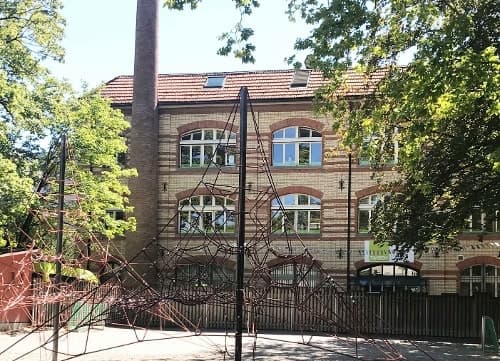


The full hub of every bilingual daycare in the city sits at /en/zurich/pedagogy/bilingual. To search by specific pair, the language hubs at /en/zurich/language/de-en and /en/zurich/language/de-fr filter cleanly. A curated short list with personal picks lives at Best Bilingual Zurich.
Frequently asked questions
Is bilingual daycare worth it for my child?
For most families, yes. Cognitive flexibility and a lasting second-language head start are well documented in the research. The catch is the quality of exposure: consistent OPOL with native speakers beats half-hearted mixed-method daycare every time.
At what age should bilingual daycare start?
Earlier is stronger. Before age three is optimal — the brain treats both languages like two first languages. Between three and five still produces strong results. After five, bilingualism is still worthwhile but the acquisition is slower and more conscious.
Does a second language delay speech development?
No. Studies consistently show no developmental delay. Bilingual children often have a smaller productive vocabulary in each language until around five, but the combined vocabulary across both languages sits in the normal range, and they keep the bilingual advantage for life.
Which method is better: OPOL or mixed?
OPOL — one person one language, where each educator consistently uses one language with all children — produces clearer language habits and stronger results. Mixed or time-split methods also work but the line is softer and breaks more easily with staff turnover.
What's code-switching and is it a problem?
Code-switching is when a child changes language mid-sentence, usually to grab a word that comes faster in the other language. It's a normal sign of bilingual processing, not confusion or delay, and usually fades around school age.
Which language pair is most common in Zurich?
German-English (DE-EN) by a significant margin. DE-FR, DE-IT, DE-ES, DE-ZH and EN-FR also exist but with smaller supply. If you want a less common pair, search by language pair on the hub rather than filtering by Kreis — the choice will drive your location more than the other way around.
What does 'real immersion' actually mean?
Several hours per day of exposure to a language from someone who speaks it as a mother tongue. A daycare that sings English songs at morning circle and otherwise runs in German offers decoration, not immersion. Ask concretely how many OPOL hours per day your child will spend in each language.
Next step
The full, current list of every bilingual daycare in the city — filtered by language pair, age band and subsidy status — is at /en/zurich/pedagogy/bilingual. For expat-specific questions — permit timing, application language, international school transition — the Expat 101 guide and the registration guide are the next reads. If you want to dive deep into specifically German-English bilingual setups, the DE-EN guide is the dedicated piece.
Keep reading
What is a Waldkita? Forest daycare in Zurich, explained
How a Waldkita (forest daycare) works, what a typical day looks like in summer and winter, what children learn, and what expat parents in Zurich should know before applying.
What is a Montessori daycare? A guide for Zurich parents
How a Montessori daycare in Zurich works, what a typical day looks like, what it costs, and which children it suits — written for parents weighing pedagogies.
Montessori vs Waldorf — which daycare is right for my child?
A side-by-side of the two classic pedagogies: daily rhythm, materials, which child fits which, and what each actually costs in Zurich. For expat parents weighing the choice.