
Daycare for Expats in Zurich — A 101 Guide
Your first ninety days as an expat parent in Zurich: how kibon works, when to apply, what waitlists to expect, and how to navigate without German.
You have just signed a contract, your move date is fixed, and now the daycare question feels like the largest open item on your list. How do I find a daycare in Zurich as an expat? Three parallel channels: register on kibon (the city's central platform, which mostly supports English), apply directly to two or three kitas in expat-friendly catchments, and check the Tagesfamilie service for home-based care. Do I need a B-permit before applying? No — kibon and most kita applications accept pending residence statuses, so you can run the application in parallel with your permit. How does the subsidy system work for expats? Stadt Zürich residents qualify regardless of nationality, given a subsidy reason (work, study, or care) and household income below the cap. The path is real, the timeline is tight but manageable, and the system was built knowing that families like yours arrive every week.
Childcare in Zurich at a glance
Three things every newly arrived parent needs to know upfront, because the rest follows from these:
- Demand exceeds supply in the densest Kreise. Apply early, apply broadly, and apply before all the other logistics feel settled. Six to twelve months of lead time is realistic; less than three months puts you in scramble mode.
- The subsidy system works for B-permit holders. Income-based, administered through kibon, applied uniformly across nationalities once you are registered as a Stadt Zürich resident.
- Bilingual and English-speaking options are real, not exceptional. Around fifty kitas across the city run structured DE-EN programmes; about ten more run full-immersion English. You are not stuck with German-only.
Permit timing and applications
The honest answer most relocation agents underplay: you do not need a granted B-permit before you start applying. Kibon accepts pending status. Most direct kita applications accept it too. The waiting time on a Stadt Zürich daycare slot is the constraint, not the permit administrative step — so the productive move is to start the daycare application immediately on signing your job offer, in parallel with the permit and the apartment search.
If you are arriving on an L-permit (short-term), the subsidy picture is more variable; some kitas accept L-permit families directly, others require B-permit confirmation first. Confirm with each kita before assuming.
The language landscape
The full spectrum runs from full-immersion English through bilingual DE-EN to standard German.
- Full-immersion English. Around ten kitas in the city. The day runs in English. Strongest concentration in Kreis 8 and Kreis 7. Waitlists at the most established programmes typically run six to twelve months.
- Bilingual DE-EN. Around fifty kitas. Both languages active across the day, usually via OPOL — one carer speaks English consistently, another speaks German. The largest band, broadly distributed.
- Standard German. The default. Most Zurich kitas. Many have one or two staff who speak some English; ask before assuming.
What "international" means here is fuzzier — the international daycare guide sorts that term out separately.
How the subsidy system works for expats
Stadt Zürich residents qualify for the subsidy regardless of nationality, given two conditions: a subsidy reason (work, study, or care responsibility for another family member) and household income below the cap. The cap currently sits at roughly CHF 200,000 family income, which catches a meaningful fraction of expat families who assume they earn too much to qualify. Worth checking even if you suspect not.
B-permit holders qualify on the same terms as Swiss residents. L-permit cases are more variable. Refugee or asylum status follows separate rules. The subsidy floor is around CHF 7.50 per day at the lowest income bands; the cap is near the unsubsidised rate of CHF 130.– to CHF 160.– per day. The full mechanics live in the kita cost guide.
Practical first ninety days
A timeline that absorbs most of the friction:
- Day 1 to 14. Register your Anmeldung at the Kreis office. Apply for your B-permit. Open a kibon account in parallel — this is the single most leveraged thing you can do early.
- Day 14 to 30. Shortlist five or more kitas across two Kreise — your home Kreis plus one realistic alternate. Submit applications via kibon and direct.
- Day 30 to 60. Visit kitas in person where possible. Submit kibon income proof. Begin the bridging-care conversation if your start date is tight.
- Day 60 to 90. Kibon decision arrives. First kita responses come in. Start finalising your choice.
- Day 90 onward. If no spot has opened, bridge with Tagesmutter, nanny-share, or au pair until one does.
Common expat mistakes
Five recurring ones, in order of cost:
- Waiting for the B-permit before applying. The single most expensive delay. Apply now.
- Restricting search to one Kreis. The market is geographically tight; one Kreis is one application pool.
- Assuming all kitas reply in English. Most do; some do not. Confirm before sending three follow-ups into a void.
- Skipping the subsidy check. Many families assume they earn too much to qualify. The cap is higher than expected.
- Booking the apartment before the kita. A common pattern. The reverse — choose the kita, then choose the apartment in its catchment — is harder logistically but pays back over the next two years.
Expat-friendly kitas
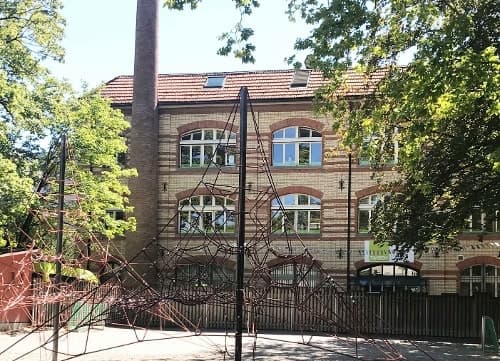
The list below shows representative kitas with confirmed English-speaking administrative support across several Kreise. Use it as a starting set rather than a ranking.



FAQ
How do I find a daycare in Zurich as an expat?
Three parallel channels work in practice: kibon (the city's central registration platform, which mostly supports English), direct kita applications (operator chains and expat-cluster kitas often reply in English), and the Tagesfamilie service for home-based care. Apply to several houses simultaneously rather than waiting for one decision.
Do I need a B-permit before applying for daycare?
No. Kibon and most direct kita applications accept pending residence statuses. You can register in parallel with your permit application — typically your B-permit confirmation arrives in time for the kita start date. Bring whatever paperwork you have today; the kita can update the file once your permit lands.
How does the subsidy system work for expats?
Stadt Zürich residents qualify regardless of nationality, given a subsidy reason (work, study, or care responsibility) and household income below the cap of approximately CHF 200,000. B-permit holders qualify on the same terms as Swiss residents. The subsidy floor is around CHF 7.50 per day; the cap is close to the unsubsidised rate of CHF 130.– to CHF 160.– per day.
What is the typical waitlist length if I just arrived?
Six to twelve months at the most established programmes in Kreis 1, 6, 7, and 8 — the high-density expat catchments. Shorter, often one to three months, in Kreis 9, 11, and 12. Specialised programmes (full-immersion English, Montessori, Waldorf) tend to run longer everywhere.
Will Swiss-German be a barrier for my child?
No. Children pick up Swiss-German naturally during kita exposure. Most Zurich-raised children switch fluently between Swiss-German (informal, day to day) and High German (school, formal contexts) by the time they enter Kindergarten at age four.
Will the kita communicate with me in English?
At expat-cluster kitas in Kreis 1, 6, 7, and 8, usually yes — administrative correspondence in English is the norm. At neighbourhood kitas elsewhere, English admin varies; staff English is often partial. Confirm during your visit so there are no surprises later.
What if I cannot find a spot in time?
Bridge options exist. Tagesmutter or Tagesfamilie (small home-based care) can match by language preference; nanny-share arrangements are common in expat circles; au pair works if you have a spare bedroom; private Spielgruppe is available from age three. The waitlist guide covers the full bridging strategy.
Next steps
For language-specific deep dives, see the English-speaking daycare guide and the bilingual DE-EN guide. For a Kreis-by-Kreis read on where expat density concentrates, the Kreis 8 overview is the natural next page; if your blocker is finding any spot at all, the waitlist strategy guide walks through the bridging options in depth.
Keep reading
Bilingual Daycare in Zurich (German-English) — A Practical Guide
How DE-EN bilingual kitas in Zurich actually work, how much English a child picks up, and how to choose between two structurally similar programmes.
English-Speaking Daycare in Zurich — A Practical Guide for Expat Parents
Where to find English-language childcare in Zurich, how full-immersion differs from bilingual, and which districts hold the most options for expat families.
French-Speaking Daycare in Zurich — A Practical Guide
Where to find French-language childcare in Zurich, the difference between École Française feeders and DE-FR bilingual kitas, and how to apply.