
What is a Waldkita? Forest daycare in Zurich, explained
How a Waldkita (forest daycare) works, what a typical day looks like in summer and winter, what children learn, and what expat parents in Zurich should know before applying.
What is a Waldkita?
A Waldkita is a daycare whose day takes place almost entirely in the forest. A small hut or wooden trailer at the forest edge serves as the base: children sleep there, get changed, and retreat inside in extreme weather. The rest of the day is outdoors — climbing trees, playing at the stream, sorting sticks, watching beetles, shovelling snow. Weather-appropriate clothing replaces the indoor building, and children go out year-round, from high summer to deep winter; only thunderstorms and severe weather warrant adjustments.
Where do you find them in Zurich? The city's main clusters sit in Kreis 3 (Friesenberg, the Üetliberg slope), Kreis 10 (Höngg, Käferberg) and Kreis 7 (Witikon, the Zollikerberg edge). Supply is modest but growing. On cost, the usual rules apply: Waldkita houses in the city follow the Stadt Zürich tariff model — typically CHF 130.– to CHF 160.– per day without subsidy, scaling with household income for subsidised places, with a floor around CHF 7.50 per day at the lowest-income end. One important distinction up front: a Waldkita is fully outdoor with a small hut as base. A "nature-focused" (naturnah) daycare has an indoor classroom and spends two to four hours outdoors. Both are valuable, but they aren't the same — and parents searching by feature often confuse them.
What a Waldkita is — and what it isn't
The idea came from the Scandinavian tradition. Denmark opened its first skovbørnehave in 1952; Germany followed in the early 1990s; Switzerland from the mid-90s. The core thesis: children learn better moving freely through a complex, living environment than inside a standardised group room with toys. The forest isn't backdrop, it's the curriculum: every tree, slope and weather event is part of the learning.
The hut or trailer is small — usually 15 to 25 square metres — and deliberately spare. It has a wood stove, benches, sleeping pads, a changing area, and storage for spare clothing. It is not the classroom; it's a retreat point for naps, lunch during a thunderstorm, nappy changes and warming up when the cold turns bitter. The day takes place outdoors, not indoors with an outing. That's the distinction from a "nature-focused" daycare, which has a conventional indoor group room and goes out from there.
A typical day at a Zurich Waldkita
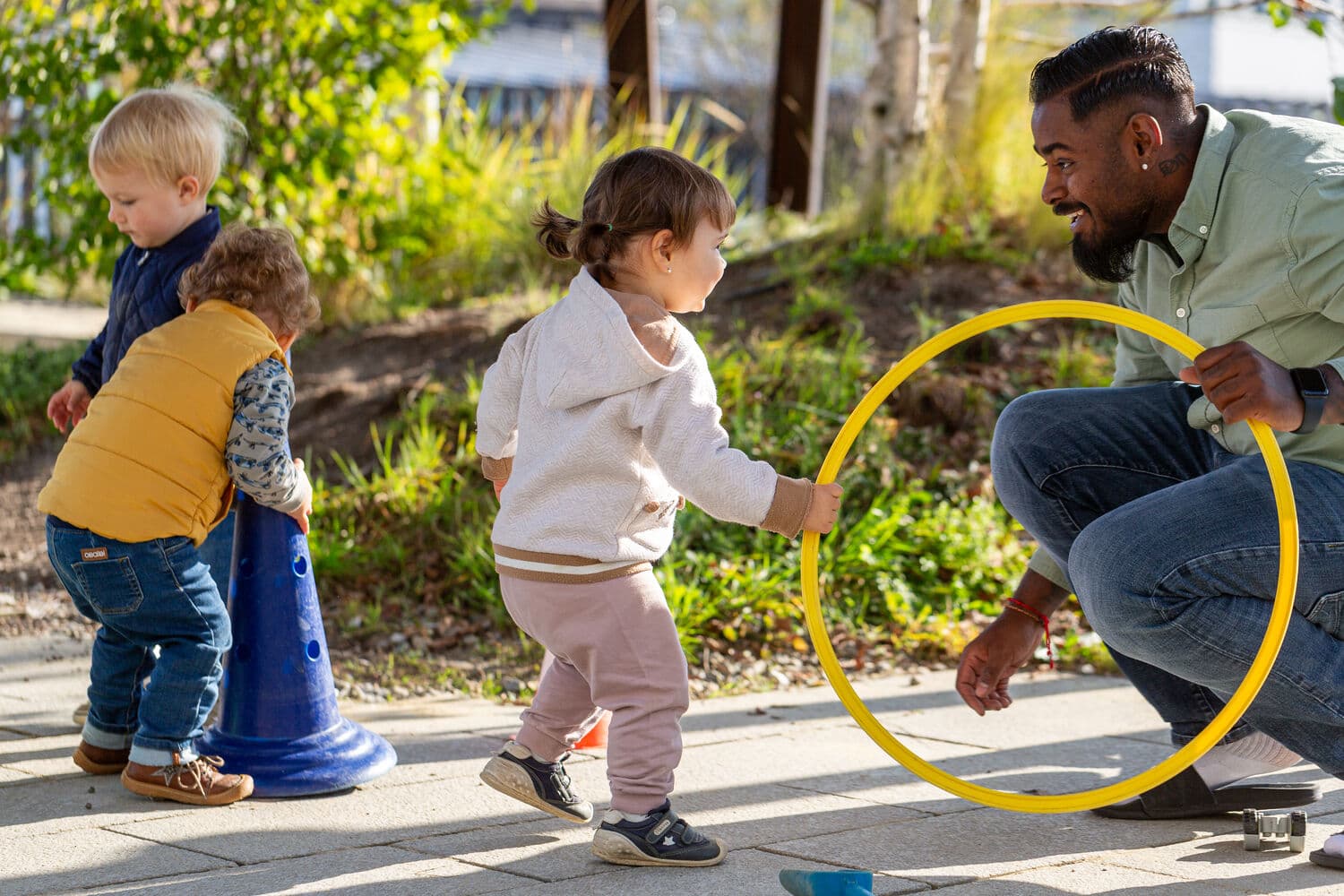
The day starts at the meeting point — often a forest-edge car park or a tram stop, from which the group walks together into the woods. That walk is part of the programme: the child wakes up, feels the weather, transitions from family mode to kita mode on foot. In the forest there's a morning circle at the hut, then free play with the landscape as material. Three children build a fort from branches. Two watch a snail. One climbs a fallen trunk. The educators are present: observing, supporting at risk points, telling stories at the campfire when the energy shifts.
Lunch is often warmed at the campfire or eaten cold, depending on season — there's no industrial kitchen and no pre-plated meal, just a shared unpacking from thermoses and lunchboxes. Naptime happens in the hut on straw mats or simple beds. Afternoons mirror mornings: play, exploration, a short walk, story, then return to the meeting point. Summer is shaped by sunscreen, shade and water bottles; winter by layers, the campfire and hot soup. The constant: the child is outside, in motion, in relationship with the surroundings.
Common parent worries, addressed honestly
"Will my child be cold?" With the right clothing, no. The layering system — base, wool sweater, down or synthetic jacket, waterproof outer suit — works far below freezing. Insulated boots, hat, mittens. No daycare leaves a crying, freezing child outside; if needed, the group moves into the hut. The most common cause of being cold is inadequate or wrong gear, and the daycare will tell you exactly what to buy.
"Will they get sick more?" The opposite, broadly. Outdoor air reduces airborne virus concentration and therefore transmission; several Scandinavian studies show forest-daycare children get fewer respiratory infections than indoor controls. There's a normal settling-in wave during the first weeks, like at any new daycare.
"Will they learn enough for school?" Yes. Motor skills, language, social behaviour and concentration develop normally or slightly better than at indoor daycares. In Switzerland, formal reading and writing begin in first grade, not in kindergarten. What forest-daycare children often bring with them: pronounced frustration tolerance, body confidence, independent risk assessment.
"What about storms and heavy rain?" Snow and rain are part of the programme. Thunderstorms, flash floods and storm warnings trigger adjustments — houses keep indoor backup locations (often a partner kita or a community room), and parents are notified early. Heat above 30°C is realistically a bigger issue today than cold: the group moves to dense-shade forest sections or shortens the day.
What this means for an expat family
A few practical points. Permits and timing: Waldkita supply in the city is limited, so apply at two or three houses in parallel. The settling-in often runs longer than the brochure suggests, especially in winter, so allow flexibility on your work-permit timing. Application language: most Waldkita houses run primarily in German with strong attention to spoken Swiss-German. If you're worried about Swiss-German integration before public Kindergarten at age four, this is one of the better daycare types for it — your child will hear the dialect daily from staff and other children. Gear cost: budget around CHF 400 for a full year of seasonal gear; quality jackets and boots are not optional, and they last more than one season if cared for. International school transition: a Waldkita upbringing transitions cleanly into Swiss state schools and into international primary schools that value experiential learning.
Who Waldkita suits
Waldkita suits children who like to move, who don't mind dirt and weather, and who flourish in less structured play. It suits families willing to invest in proper gear once a season and to extend the philosophy at home — more time outdoors, less anxiety about puddles and grazes. If your child is under 18 months, consider a nature-focused daycare with an indoor base instead; many Waldkitas only enrol from 2.5 years, because sleep, nappy changes and shelter for the very smallest children work better indoors.
Where to find a Waldkita in Zurich
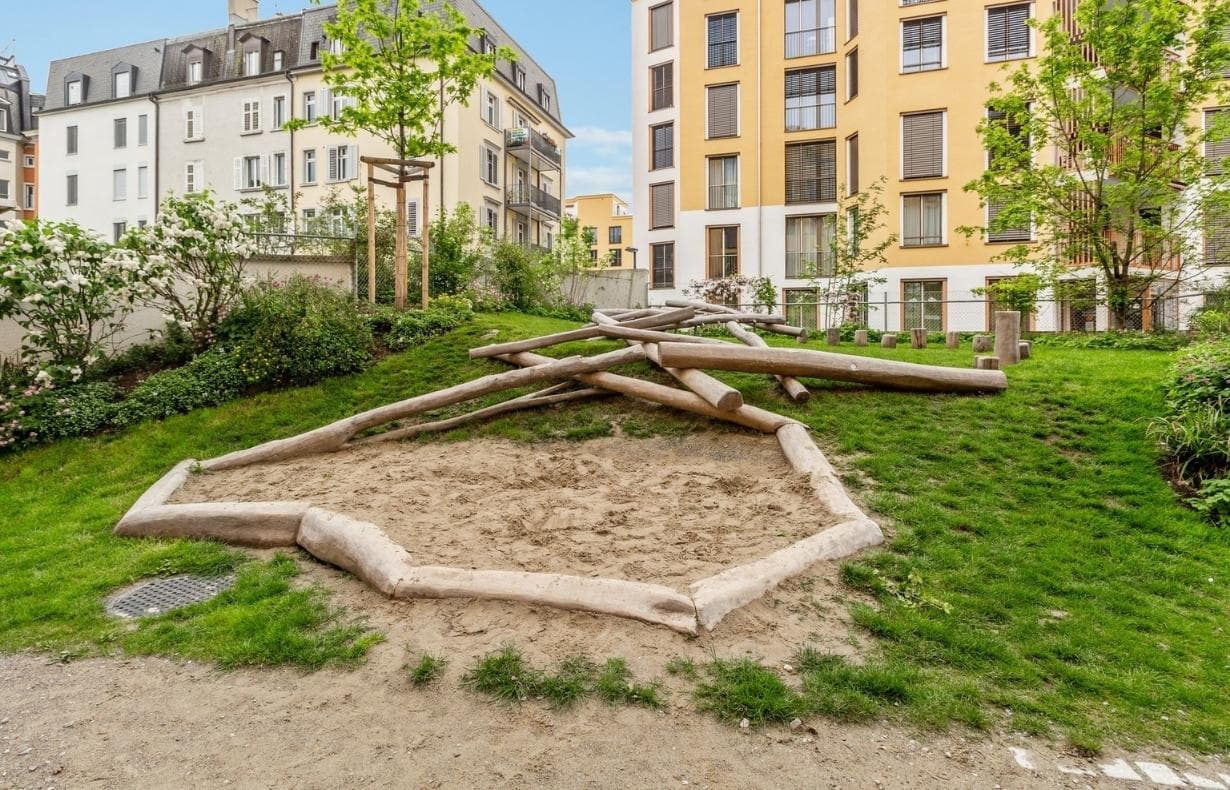
The houses below are a representative cross-section of outdoor-leaning daycares in the city. Some are pure Waldkitas, others sit closer to "nature-focused" with a strong outdoor block — when you visit, ask directly how many hours per day are spent outside.



The full hub of every Waldkita-aligned daycare in the city is at /en/zurich/pedagogy/forest_nature. To understand the difference from the indoor-base variant, the nature-focused explainer is the companion piece. For Kreis-specific picks, the Kreis 3 forest daycare guide and Kreis 10 forest daycare guide sit alongside this post.
Frequently asked questions
What is a Waldkita?
A daycare whose day takes place almost entirely in the forest. A small hut or trailer at the forest edge serves as the base — for sleeping, nappy changes, and shelter during extreme weather. The 'classroom' is the forest itself: trees, stream, slope, clearing.
Are children in forest daycares sick more often?
Studies point to the opposite. Outdoor air reduces virus transmission significantly; Waldkita children tend to get fewer respiratory infections than indoor-only daycare children. The first weeks can bring a settling-in wave like at any new daycare, but the system then balances out.
What does my child need to wear?
Waterproof outer layer (rain trousers and jacket), warm layers underneath, insulated boots in winter, sun hat and light long sleeves in summer. Gear quality matters more than brand. The daycare publishes a seasonal clothing list — take it seriously, because cheap rain jackets last two hours and good ones last all day.
What happens in storms or heavy snow?
Snow is part of the programme — the children love it. Thunderstorms and severe storms shorten the day or move the group to an indoor backup location. Heavy rain with proper gear is no obstacle; houses have routines for it.
Will my child learn enough 'school stuff'?
Yes. Motor skills, language, social behaviour and concentration develop normally or better than indoor-only peers. Reading and writing start in first grade in Switzerland anyway, not in kindergarten — a Waldkita doesn't harm that transition, and many studies show advantages in focus and frustration tolerance.
Do forest daycares go out in winter too?
Yes, year-round. The Swiss mantra: there's no bad weather, only wrong clothing. Only extreme conditions — storms, thunder, flash floods, heat warnings — trigger adjustments to the day.
What's the difference between Waldkita and 'nature-focused' daycare?
A Waldkita is fully outdoor with a small hut as base. A nature-focused daycare has an indoor classroom and spends typically two to four hours per day outdoors — significantly more than a standard daycare with a garden, but with an indoor fallback. Both are valuable, but they aren't the same.
Next step
The full list of every Waldkita-aligned daycare in the city is at /en/zurich/pedagogy/forest_nature. If you're still weighing Waldkita against the indoor-base variant, the nature-focused explainer is the next read. For application logistics and money-side practicalities, the Zurich registration guide and the cost guide sit alongside this post.
Keep reading
Bilingual daycare in Zurich — pros, cons, and the right age to start
Whether bilingual daycare is worth it, when to start, what OPOL really means, and which language pairs Zurich actually offers — for expat families weighing options.
What is a Montessori daycare? A guide for Zurich parents
How a Montessori daycare in Zurich works, what a typical day looks like, what it costs, and which children it suits — written for parents weighing pedagogies.
Montessori vs Waldorf — which daycare is right for my child?
A side-by-side of the two classic pedagogies: daily rhythm, materials, which child fits which, and what each actually costs in Zurich. For expat parents weighing the choice.