
Bilingual Daycare in Zurich (German-English) — A Practical Guide
How DE-EN bilingual kitas in Zurich actually work, how much English a child picks up, and how to choose between two structurally similar programmes.
You have decided bilingual is the right call for your child, and you now want to know which DE-EN house actually fits. Where can I find DE-EN bilingual daycares in Zurich? Around fifty kitas across the city run a structured German-English bilingual programme; the densest clusters sit in Kreis 7, Kreis 8, and Kreis 5. How much English will my child actually pick up? Receptive understanding usually appears within three to six months at a consistent programme; productive speaking follows within nine to eighteen months. Which Zurich daycares offer real immersion in two languages? Most established DE-EN houses use OPOL — one person, one language — which is close to per-staff-member immersion, with the child hearing both languages reliably from specific carers. The honest trade-off behind every bilingual decision is this: both languages develop in parallel rather than one racing ahead, and that is exactly the point.
Who this guide is for
This is the deeper read for parents who have already worked through the language spectrum, ruled out full-immersion English on one side and standard German on the other, and now want to choose between two or three structurally similar DE-EN programmes. If you are still calibrating that earlier choice, the English-speaking daycare guide lays out the full spectrum first.
How DE-EN bilingual kitas work in practice
Three operating models account for almost everything labelled "bilingual" in Zurich. Knowing which one a kita actually runs matters more than the marketing language on the website.
- OPOL — one person, one language. Staff are deliberately split by language. One carer speaks English consistently to the children all day; another speaks German consistently. This is the dominant model in Zurich's most established DE-EN houses. The strength: the child associates each language with a stable face and rhythm, which is how human language acquisition actually works.
- Mixed-method. Any staff member may use either language depending on context. This sounds flexible and is often easier to staff, but the language input is less predictable. Children at mixed-method kitas tend to develop receptive understanding fine but slower productive output in the minority language.
- Language-by-time. Mornings run in German, afternoons in English, or vice versa. Less common in Zurich; more common in school-age programmes than in Krippe.
When you visit a kita, ask plainly: which model do you use, and what happens when an English-speaking carer is on holiday? The answer tells you how robust the programme is.
How much English will my child actually pick up?
Honest expectations help here. At a consistent OPOL programme starting around age one, the typical arc looks like this:
- Months 0 to 3. The child is silently absorbing. Expect zero spoken English; this is normal.
- Months 3 to 6. Receptive understanding emerges. The child follows simple English instructions, points to the right object when an English word is used, laughs at jokes in either language.
- Months 9 to 18. Productive English appears — first single words, then two-word phrases, then short sentences. The pace varies enormously between children; this is not a measure of intelligence.
- Year 2 onward. If exposure is consistent, by age four the child often speaks both languages comfortably, with stronger production in whichever one dominates at home.
What truly bilingual exposure does is grow both languages — not at the expense of one. If you read claims that bilingual kitas weaken German, those typically come from contexts very different from the Zurich market.
Bilingual versus full English — the trade-off
The cleanest way to frame the choice: bilingual gives you both languages secure, with slightly slower productive growth in each in the early years; full-immersion English gives you stronger English fluency, with German developing primarily through the Swiss school system from age four. Neither is wrong. If you are building toward an international school feeder, full-immersion is the cleaner pipeline. If you want your child to land in the public Kindergarten at four with German already on board, bilingual is the safer route.
The most established DE-EN kitas in Zurich
The list below shows representative DE-EN programmes across several Kreise. Use it as orientation, not a ranking — fit depends on your commute, your child's age, and the kita's specific pedagogical line beyond language.
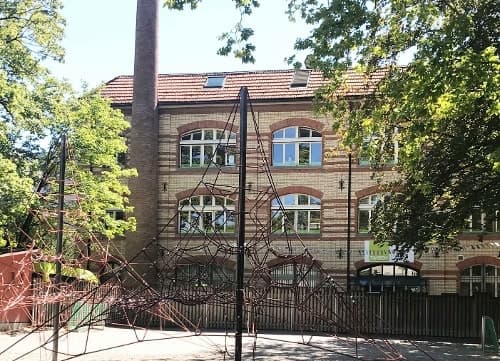

A note on operators. Multi-site chains such as Globegarden, Smiling Tree, and Pop e Poppa offer DE-EN programmes across several locations, which is useful if you want consistency in case you move within the city. Single-house kitas often have a more cohesive team and culture, but you are tied to the one address.
Cost and waitlists
Pricing for DE-EN bilingual childcare matches the rest of the Zurich market. Without subsidy, expect CHF 130.– to CHF 160.– per day. The city subsidy via kibon scales by household income — the floor is around CHF 7.50 per day, the cap close to the unsubsidised rate. Waitlists at the most established DE-EN programmes in Kreis 7, 8, and 1 typically run six to twelve months; in Kreis 5, 9, or 11, often shorter. The full cost mechanics live in the kita cost guide.
How to choose between two DE-EN kitas
When you have visited two structurally similar bilingual houses and they look almost identical on paper, four questions tend to surface the difference:
- Watch the language model in action during your visit. Is OPOL really happening, or does everyone speak both? Listen for ten minutes; the answer is audible.
- Listen for staff fluency. Are the English-speaking carers native or near-native? Heavily accented English from a non-fluent carer dilutes the model.
- Ask what happens when a key staff member leaves. Bilingual programmes are fragile to staff turnover. A kita that has thought about this has a plan.
- Match by daily rhythm and pedagogy. Bilingual is one variable; the rest of the day — outdoor time, group structure, food, age-mixing — matters at least as much.
FAQ
Where can I find a DE-EN bilingual daycare in Zurich?
The DE-EN hub at /en/language/de-en lists every kita running a structured German-English bilingual programme. Most established houses cluster in Kreis 7 and 8 (expat residential streets) and Kreis 5 (the tech-employer catchment). Around fifty kitas across the city advertise a structured DE-EN programme.
How much English will my child actually pick up at a bilingual kita?
Receptive understanding — the child following English instructions and conversation — typically appears within three to six months. Productive English, the child speaking it, tends to follow within nine to eighteen months at a consistent OPOL programme. Final fluency depends on home reinforcement and continuity beyond the kita years.
What is the difference between bilingual and full-immersion?
Bilingual means both languages are genuinely active across the day, usually with staff split by the OPOL principle (one person, one language). Full-immersion means a single language exclusively, with the second language entering only via the public Kindergarten at age four. DE-EN kitas almost always use OPOL — close to per-staff-member immersion, but the child hears both.
Which DE-EN kitas in Zurich are most established?
Operator chains such as Globegarden, Smiling Tree, and Pop e Poppa run multi-site DE-EN programmes; smaller single-house kitas often have more consistent culture but smaller scale. The KitaList below shows representative examples; the DE-EN hub carries the full directory.
Do both parents need to speak both languages?
No. A bilingual kita supplies the second-language exposure independently of what is spoken at home. What matters is consistency: at an OPOL programme, the child hears each language reliably from specific carers, regardless of the family's home language.
Will my child mix the two languages?
Some code-switching — alternating mid-sentence — is normal and temporary. It is a sign of bilingual processing, not confusion. Most bilingual children stop code-switching by school age as their two language systems consolidate into separate channels.
Is a bilingual kita more expensive than a monolingual one?
No. Pricing matches standard Zurich rates of CHF 130.– to CHF 160.– per day private, and the city subsidy via kibon applies on the same income-based terms. There is no bilingual surcharge in the Zurich market.
Next steps
For the full directory, see the DE-EN language hub and the curated best bilingual daycares in Zurich. If you want the broader expat-arrival context, daycare for expats — Zurich 101 walks through the first ninety days end to end; for a deeper read on the science behind early bilingualism, the bilingual pedagogy explainer closes the loop.
Keep reading
Daycare for Expats in Zurich — A 101 Guide
Your first ninety days as an expat parent in Zurich: how kibon works, when to apply, what waitlists to expect, and how to navigate without German.
English-Speaking Daycare in Zurich — A Practical Guide for Expat Parents
Where to find English-language childcare in Zurich, how full-immersion differs from bilingual, and which districts hold the most options for expat families.
French-Speaking Daycare in Zurich — A Practical Guide
Where to find French-language childcare in Zurich, the difference between École Française feeders and DE-FR bilingual kitas, and how to apply.