
International Daycare in Zurich — What the Term Actually Means
How to tell international daycares apart from bilingual ones, which Zurich kitas qualify, and what to expect on cost and admissions.
"International" is one of the most misused labels in the Zurich childcare market. What defines an international daycare? Strictly, three categories qualify: international school feeders, multilingual private kitas with three or more active languages, and bilingual DE-EN kitas with multicultural staff and English-language administration. How is international different from bilingual? Bilingual is structurally narrower — two specific languages with structured per-staff exposure. International is broader — often multilingual plus a global cultural framing, with festivals from multiple traditions, English-language admin even when the day runs largely in German, and multinational staff teams. How do I find a daycare as a globally mobile family in Zurich? Three honest paths: international school feeders if you are anchoring toward that pipeline, multilingual private kitas, or a strong bilingual DE-EN house with multicultural staff. The right choice depends on whether "international" to you means a school-track pipeline, a specific language mix, or simply a culturally diverse early-years environment.
Who this guide is for
Globally mobile families on multinational assignments who expect to leave Zurich within three to five years; families planning an International School of Zurich or Lycée Français trajectory and want a feeder; bicultural couples whose home languages are neither German nor English (Hispano-Suizo families, Italian-Swiss couples, third-culture families with mixed heritage); and families on UN, NGO, or diplomatic assignments who want their children's daycare to reinforce a multinational identity. If your situation is closer to "expat family arriving from London, English at home, planning to stay", the English-speaking daycare guide is the better starting read.
What "international" actually means
The term covers a clear spectrum that decomposes into three working categories.
- International school feeders. Pre-elementary programmes formally affiliated with the International School of Zurich, ZIS, or the Lycée Français. The day reflects the school's pedagogical line — IB Primary Years for the IS-affiliated, French national curriculum prep for the Lycée. Admissions follow the school's own process; many of these centres sit outside kibon.
- Multilingual private kitas. Three or more languages active across the day. Typically a DE-EN-FR mix, sometimes DE-EN plus a heritage language depending on the family pool. These are independent operators, often participating in kibon.
- Bilingual DE-EN kitas marketed as international. Structurally bilingual, but with multicultural staff and English-language admin that gives the operation an international feel. The line between this and a strong DE-EN bilingual kita is often invisible from the outside.
The first category is genuinely structurally different from a bilingual kita. The third is mostly a marketing position. The second sits in between.
How international differs from bilingual
The cleanest distinction: bilingual is a structural claim about language input — two specific languages with structured per-staff exposure. International is a positioning claim about culture and target family — multinational staff, English-language admin even when the day is largely in German, festivals and food from multiple traditions, often a globally mobile parent body.
A child's actual daily experience at a "multicultural bilingual DE-EN" kita and a kita marketed as "international" is often identical. If structural multilingualism matters to you (three or more languages active), look for that explicitly rather than trusting the label.
Languages typically offered
German and English are the base in almost every international centre — German because the children live in a German-speaking city, English because it is the lingua franca of globally mobile families. French is layered most commonly, both for École Française feeder families and because Romand-Swiss connections still matter in this demographic. Italian appears at a handful of houses with community connections to Tessin or northern Italy. Spanish is offered at a small number of programmes serving the Hispano-Suizo population. Heritage languages such as Mandarin, Arabic, Russian, or Turkish appear rarely, usually through community-specific affiliations rather than as part of the broad multilingual offer.
Most international centres anchor on English as the lingua franca, with rotating "language enrichment" staff providing exposure to additional languages on a structured schedule rather than a continuous OPOL model.
Where to find them
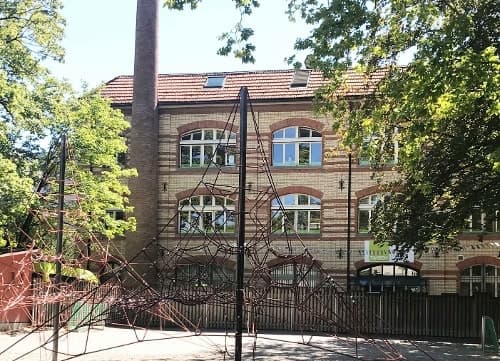
The list below shows representative international and multilingual kitas across the city. Use it as orientation rather than ranking — the right choice depends on whether you are anchoring toward a specific school feeder, looking for a particular language mix, or simply seeking a culturally diverse early-years environment.


Geographically, international centres cluster around the international school catchments in Kreis 6, 7, and 8 and along the diplomatic-residential corridor. If you live further out, expect a longer commute or a narrower choice.
Cost
International kitas often skew more expensive than the standard Zurich market. School-affiliated centres in particular tend to run above the typical CHF 130.– to CHF 160.– per day range. The city subsidy via kibon usually does not apply at private school-affiliated centres; independent international kitas often do participate. Where they do, the subsidy floor is around CHF 7.50 per day at the lowest income bands, the cap close to the unsubsidised rate. The full subsidy mechanics live in the kita cost guide.
Best fit for...
Three concrete fits, plus one alternative worth considering:
- Globally mobile families on multinational, UN, or NGO assignments expecting to leave Zurich in three to five years. The international centre normalises the transient pattern your family already lives.
- Families planning international school continuity. A pre-elementary feeder smooths the transition into IS, ZIS, or the Lycée Français.
- Bicultural couples with non-DE and non-EN home languages. A multilingual centre is more likely to find staff who speak the heritage language than a standard bilingual kita.
- The alternative. If you are committed to remaining in Zurich long-term and either German or English will dominate at home, a strong bilingual DE-EN kita usually delivers the same daily experience at meaningfully lower cost. The international branding adds price; whether it adds value depends on your trajectory.
FAQ
What defines an international daycare in Zurich?
Loosely: a kita where multiple non-German languages are active across the day and the framing serves global-mobility families. Strictly, three categories qualify: international school feeders, multilingual private kitas with three or more active languages, and bilingual DE-EN kitas with multicultural staff and English-language administration. The line between the third and a standard bilingual kita is often blurry.
Which international daycare options does Zurich have?
A small but growing pool: pre-elementary feeders for the International School of Zurich, ZIS-affiliated programmes, the Lycée Français pre-elementary, plus a number of independent multilingual centres. The KitaList below shows representative examples; the exact landscape evolves as new operators enter the market.
How does international differ from bilingual?
Bilingual means two specific languages with structured exposure across the day — usually German plus one other. International often means multilingual (three or more languages active) plus a global cultural framing — festivals from multiple traditions, English-language admin even when the day runs largely in German, multinational staff. The line is fuzzy; many kitas marketed as international are bilingual DE-EN with multicultural staff.
What languages are typically offered at international daycares?
German and English form the base, always. French is often layered for École Française feeder track families. Italian appears for community connections to Tessin or northern Italy. Spanish is offered at a small number of houses serving the Hispano-Suizo community. Mandarin or other heritage languages appear rarely, usually via specific community-affiliated programmes.
Is international daycare more expensive than standard?
Often yes. School-affiliated centres in particular tend to run above the typical CHF 130.– to CHF 160.– per day range. The city subsidy via kibon usually does not apply at private school-affiliated kitas, though independent international centres often do participate.
Are there UN-track or diplomatic-family kitas in Zurich?
Yes, in small numbers — typically affiliated with international schools or specific cultural communities. Diplomatic-family Zurich is smaller than Geneva's; supply reflects that. If your family is on a UN or NGO assignment, the international school feeder route is the most direct path.
Who is an international daycare a good fit for?
Globally mobile families on multinational, UN, or diplomatic assignments; families planning continuity into an international school later; bicultural couples with non-DE and non-EN home languages who want their child's first peer environment to mirror that diversity. For families committed to remaining in Zurich long-term, a strong bilingual DE-EN kita usually serves the same goal at lower cost.
Next steps
For language-specific deep dives, see the English-speaking daycare guide, the bilingual DE-EN guide, and the French-speaking daycare guide. For the broader expat-arrival context, daycare for expats — Zurich 101 walks through the practical first ninety days; for the Kreis-by-Kreis read, the Kreis 7 overview covers the international-school feeder corridor.
Keep reading
Bilingual Daycare in Zurich (German-English) — A Practical Guide
How DE-EN bilingual kitas in Zurich actually work, how much English a child picks up, and how to choose between two structurally similar programmes.
Daycare for Expats in Zurich — A 101 Guide
Your first ninety days as an expat parent in Zurich: how kibon works, when to apply, what waitlists to expect, and how to navigate without German.
English-Speaking Daycare in Zurich — A Practical Guide for Expat Parents
Where to find English-language childcare in Zurich, how full-immersion differs from bilingual, and which districts hold the most options for expat families.