
English-Speaking Daycare in Zurich — A Practical Guide for Expat Parents
Where to find English-language childcare in Zurich, how full-immersion differs from bilingual, and which districts hold the most options for expat families.
If you have just landed in Zurich and your German is still in "I can order a coffee" territory, the kita question can feel overwhelming. This guide is the structured map. Where can I find an English-speaking daycare in Zurich? Concentration is highest in Kreis 1, 6, 7, and 8 — the catchments that hug the universities, the Universitätsspital, and the historically expat-heavy residential streets. Which Zurich district has the most English-speaking kitas? Kreis 8 (Seefeld) leads by absolute density, with Kreis 7 close behind, and Kreis 6 the strongest near the hospital. How do I find a daycare as an expat new to Zurich? The path is: pick a district that fits your commute, register on kibon (the city's central platform, which mostly supports English), and apply directly to two or three kitas in parallel — you do not need your B-permit to land first.
Who this guide is for
This guide is written for expat and international parents who arrive with a job offer and a six-week deadline; for bicultural couples who speak English at home and want their child's daycare to reinforce that; and for families planning continuity into an international school feeder programme. If you are a Swiss family looking for English exposure for your child, the bilingual daycare guide is the better starting point.
Full English vs bilingual vs occasional English — the spectrum
The biggest mistake new arrivals make is treating "English-speaking" as a single category. It is a spectrum, and the difference matters for your child's day.
- Full-immersion English. The entire day runs in English. Staff are native or near-native speakers. German exposure is incidental — perhaps a song, a Swiss-German greeting from a colleague, the Tram 4 conductor on an outing. There are roughly ten kitas in this band in Zurich. Demand is high; waitlists tend to run six to twelve months at the most established programmes.
- Bilingual DE-EN. Both languages are genuinely active across the day. The most common model is "one person, one language" — staff are deliberately split, so a child hears consistent English from one carer and consistent German from another. This is the largest band in Zurich, with around fifty kitas advertising it in some structured form.
- Occasional English. One staff member speaks English, or English shows up in a weekly activity. This is not a real bilingual programme. It can still be a fine fit if your child is already strongly anchored in English at home — but understand what you are buying.
When a kita's website says "English-friendly", ask: who speaks it, when, and to whom? A clear answer tells you which band you are in.
By district
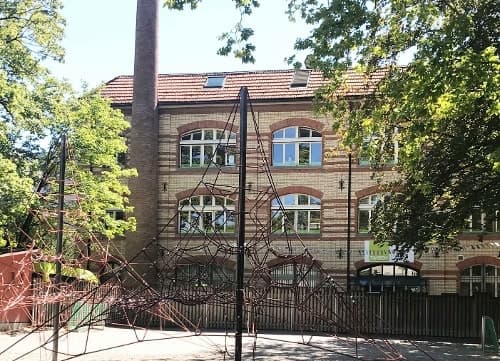
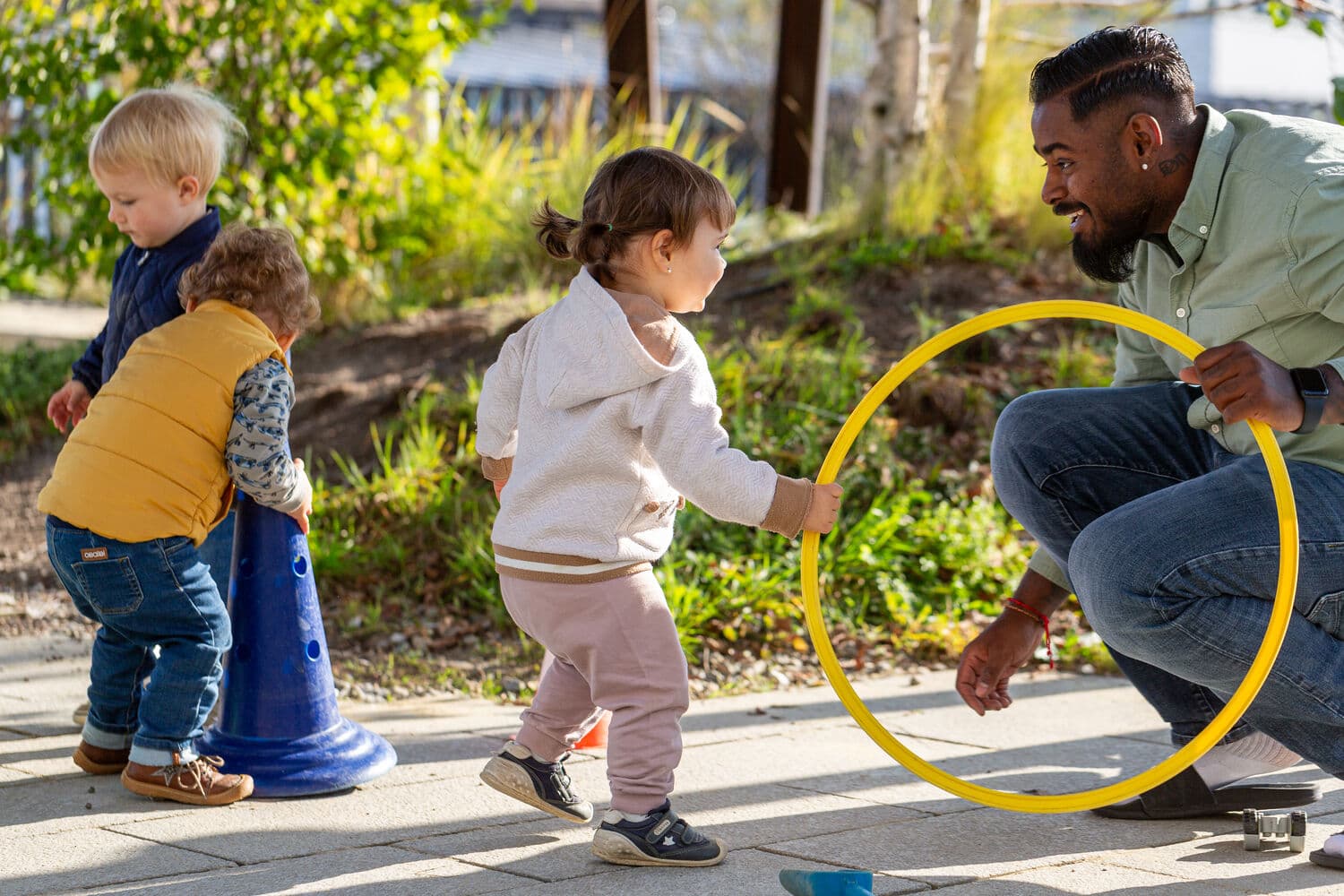
Below is a curated list of representative English-speaking childcare programmes across the city, grouped loosely by Kreis. Use it as a starting orientation, not a ranking — fit depends on your commute, your child's age, and the programme's specific philosophy.

A quick orientation by Kreis:
- Kreis 1 (city centre, Hochschulen): a small pool, often affiliated with ETH and UZH staff catchments. Good if you commute by tram into the centre.
- Kreis 6 (Unterstrass / Oberstrass): the Universitätsspital catchment. Strong bilingual focus, with hospital-staff English embedded.
- Kreis 7 (Hottingen / Hirslanden): expat residential streets and an International School feeder corridor; a natural pre-IS option.
- Kreis 8 (Seefeld): the highest expat density in the city. Most established bilingual programmes live here. Waitlists are correspondingly long.
- Kreis 5 (Industriequartier): younger and tech-leaning. The bilingual scene is growing alongside the area's employer mix.
Cost — what to expect
Pricing for English-language childcare tracks the rest of the Zurich market. Without subsidy, a full-time spot typically runs CHF 130.– to CHF 160.– per day. With the city subsidy, the rate scales by household income — the floor is around CHF 7.50 per day, the cap around the unsubsidised rate. There is no English-language premium baked into the market, though English-speaking administrative support varies kita to kita; confirm directly when you apply. For the full picture, the kita cost guide breaks down subsidy mechanics in detail.
How to apply when you do not speak German yet
Five practical moves that take the friction out of the process:
- Register on kibon. It is the Stadt Zürich's central platform and mostly supports English. One file, one place — kitas can pull your registration from there.
- Pick kitas with English-speaking admin. Some accept email correspondence in English even if their website is German-only. Ask before you commit time.
- Do not wait for the B-permit. Kibon and most direct kita applications accept a pending residence status. Apply in parallel; update the file when your permit lands.
- Bring your documents in original plus English translation if you have them. Many kitas accept the English version alone; some will ask for an apostille. The apostille step takes longer than you expect, so start early.
- Use email rather than voice calls. Voice German is the steepest part of the curve. Email gives you time to compose, and most kita administrators are comfortable replying in English when the subject line is in English.
A word on integration
A common worry: will my child miss out on German if we go full-immersion English? In practice, no — the Swiss public Kindergarten, which children enter at age 4, carries the German load with full institutional weight. By the end of Kindergarten 2, most children are fluent. If you want German earlier, choose bilingual; if you want maximum English continuity through the daycare years, choose full-immersion. Both paths land in the same place by primary school.
FAQ
Where can I find an English-speaking daycare in Zurich?
The English language hub at /en/language/english lists every kita where English is a primary or shared instruction language. Density is highest in Kreis 1, 6, 7, and 8 — the catchments closest to the universities, hospitals, and expat residential pockets.
What is the difference between full-immersion and bilingual?
Full-immersion means the entire day runs in English, with native or near-native staff and only incidental German exposure. Bilingual DE-EN means both languages are genuinely active across the day, usually with staff divided by language ('one person, one language'). Both are valid; choose based on whether you want maximum English continuity or balanced exposure.
How much does English-language daycare cost in Zurich?
Roughly the same as monolingual kitas: typically CHF 130 to CHF 160 per day without subsidy, lower with subsidy via kibon. There is no English-language premium baked into the Zurich market.
Which districts have the most English-speaking kitas?
Kreis 1 (city centre), Kreis 6 (Unterstrass and Oberstrass — the Universitätsspital catchment), Kreis 7 (Hottingen and Hirslanden), and Kreis 8 (Seefeld). Kreis 5 (Industriequartier) is also growing alongside the tech-employer footprint.
Do I need a B-permit before applying?
No. Kibon and most direct kita applications accept pending residence statuses, so you can register in parallel with your permit. Bring whatever paperwork you have today; the kita can update the file once your permit lands.
Will my child still learn German?
At a bilingual kita, yes — German is genuinely active throughout the day. At a full-immersion English kita, German exposure stays incidental until the age-4 transition into the public Kindergarten, where the system carries the language load.
Are there English-speaking Tagesfamilie or Tagesmütter?
Yes, though fewer than in formal Krippen. The Stadt Zürich Tagesfamilie service can match by language preference where the database has it on file; ask explicitly when you submit your request.
Next steps
For the full directory of English-language childcare across the city, see the English language hub and the curated best English-speaking kitas in Zurich. If you are still calibrating your area choice, the Kreis 8 bilingual guide is a useful next read; if logistics are your blocker, daycare for expats — Zurich 101 walks through the first thirty days end to end.
Keep reading
Bilingual Daycare in Zurich (German-English) — A Practical Guide
How DE-EN bilingual kitas in Zurich actually work, how much English a child picks up, and how to choose between two structurally similar programmes.
Daycare for Expats in Zurich — A 101 Guide
Your first ninety days as an expat parent in Zurich: how kibon works, when to apply, what waitlists to expect, and how to navigate without German.
French-Speaking Daycare in Zurich — A Practical Guide
Where to find French-language childcare in Zurich, the difference between École Française feeders and DE-FR bilingual kitas, and how to apply.