
What is a Waldorf daycare? A guide for Zurich parents
How a Waldorf (Steiner) daycare works, what a typical day looks like, what materials they use, and which children it suits — for expat parents weighing pedagogies near Zurich.
What is a Waldorf daycare?
A Waldorf daycare — Waldorf and Steiner are interchangeable terms — runs on the pedagogy Rudolf Steiner developed: a strongly rhythmic day that repeats week to week, natural materials in wood, wool and beeswax, plenty of free imaginative play, and a calendar of seasonal festivals. Compared with a Montessori kita, the day is less material-led and more communal: the child is woven into a group rhythm and a weekly melody rather than choosing from an open shelf.
A typical week looks the same every week — Monday painting, Tuesday bread baking, Wednesday eurythmy, Thursday story, Friday cleaning. The repetition is the point: it gives small children something to lean on. Screens never appear; explicit instruction is rare; children learn by imitating purposeful adult work — kneading dough, washing windows, oiling tables — that the staff carry out openly during the morning. On cost, Waldorf houses in Switzerland are not systematically more expensive than standard daycares; where they take subsidised places, they follow the same Stadt Zürich tariff model — a floor of around CHF 7.50 per day for families with the lowest household incomes, and a ceiling of CHF 130.– to CHF 160.– per day at full price. One honest caveat for expats searching by neighbourhood: inside the city of Zurich the Waldorf scene is thin. The real Swiss Waldorf cluster sits around the Rudolf Steiner Schule in Adliswil and across the wider canton.
Where Waldorf comes from — and what "anthroposophical" means
Rudolf Steiner founded the first Waldorf school in 1919 in Stuttgart, in a factory of the same name whose owner asked him to set up a school for the workers' children. The pedagogy is part of his anthroposophy, a worldview that describes human development in seven-year stages. For sceptical parents the most important thing to know up front: anthroposophy is not a religion. There is no denomination, no required belief, no religious instruction. The festivals through the year — harvest, the lantern walk, midwinter, spring — are observed culturally and seasonally, not as services. If a particular ritual feels off to you when visiting, ask the lead about it directly; houses vary in how prominently anthroposophical detail surfaces.
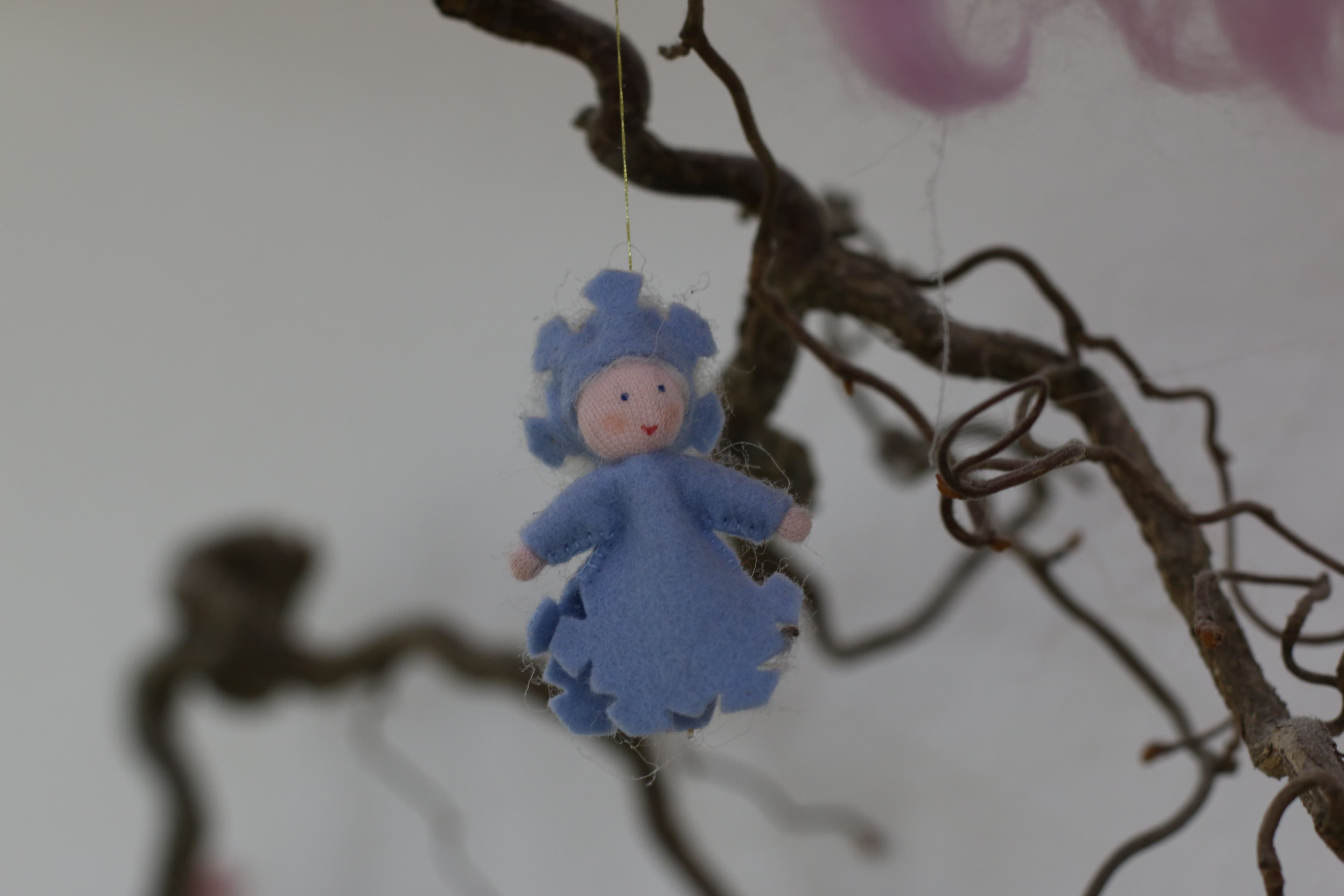
The pedagogical centre is straightforward. In the first seven years, children learn primarily through imitation rather than instruction. Adults model meaningful work — baking, sweeping, singing, telling stories — and children move within that. Almost everything else follows from that one idea. The materials are deliberately open (a faceless cloth doll can be any character a child imagines), the rooms are warm and unhurried, and the day is a reliable weave of repetition rather than a sequence of changing activities.
A day in a Waldorf daycare
The morning starts with arrival, then a circle of songs, verses and finger games, then a long block of free play. During that block the lead and assistants are visibly busy with the week's work — kneading bread, wet-felting wool, peeling carrots, oiling tables. That visible adult work is the point: the imitation-based pedagogy needs something worth imitating. Children either play alongside, help out, or watch. Nobody is told to engage with a particular material; the child chooses from what's already in the room — wooden blocks, scarves, baskets, pinecones.
After that comes a shared lunch with a verse spoken before the meal, a long outdoor block — usually woods, the kita garden, or the nearest neighbourhood playground — and a quiet rest period. Eurythmy, Waldorf's distinctive movement form that makes speech and music visible, shows up regularly in the kindergarten group; in the toddler room it appears more rarely. The weekly pattern becomes obvious within three days: Monday painting, Tuesday bread, Wednesday movement. That predictability is meant to feel like safety, not like boredom.
Strengths and weaknesses, honestly
The strengths show up plainly. Children in Waldorf houses develop strong imaginative play, are noticeably calmer with extended open-ended activities, and can stay with a single thread of play for a long time. The deliberate refusal of screens and pre-formed plastic toys pays off visibly for many city families, especially when the rest of the day is loud and stimulating. The weekly melody helps children who don't cope well with constant transitions far more than a programme of shifting activities does.
The trade-offs are real. Some parents underestimate how much the pedagogy expects screen-free practice not just at the kita but at home — using the iPad as a quiet-time fix in the evening will sit awkwardly against the daycare's whole philosophy. There is no academic preparation in the conventional sense — no letter-tracing, no number drills — and that is intentional, but if you're coming from a UK or US system that pushes early literacy, it can feel slow. And quality varies more with staffing than at material-led pedagogies. A lead with a Waldorf early-childhood diploma carries a very different day than a lead who has only adopted the label.
Who Waldorf suits
Waldorf works well for children who flourish with rhythm and repetition, who carry imagination and stories naturally, and who settle better in a calm group than in a constantly changing programme. It works for families ready to extend the line at home: a living room with screens not constantly running, simple natural materials, an evening read instead of a video. If your child is already deeply independent and material-driven and gets impatient in shared activity, look at Montessori or a standard daycare in parallel. Reggio Emilia is also worth considering if your child opens up most through projects and back-and-forth investigation with peers.
What this means for an expat family
A few practical points specific to families new to Zurich. Timing: the most established Waldorf houses are outside the city, so factor a longer commute into your decision; for a small child the daily journey matters. Language: Waldorf in Switzerland runs almost exclusively in German, with strong attention to spoken language. If you want guaranteed Swiss-German exposure for the transition into public Kindergarten at age four, that's a feature, not a problem. Administrative support: smaller Waldorf houses sometimes prefer to handle the application and onboarding entirely in German. Ask in your first email which language they prefer; the answer is a useful early signal of how the rest of the relationship will run. International schools: a Waldorf upbringing transitions cleanly into the local Swiss state school system; if you anticipate an English-language international school later, ask about the language gap and the typical reading-readiness moment.
Where to find a Waldorf daycare near Zurich
The houses below are a representative cross-section of Steiner-affiliated daycares in the wider Swiss Waldorf network. As noted above, the strongest concentration sits beyond the city limits, so the list reflects the regional landscape rather than a city-only set.

The full hub of every Waldorf-aligned daycare we track, with filters for Kanton, age band and subsidy status, sits at /en/zurich/pedagogy/waldorf. A curated short list with personal picks lives at Best Waldorf Zurich, and the head-to-head with the other classic line is in Montessori vs Waldorf. If you'd rather start with the alternative, the Montessori explainer is the natural companion piece.
Frequently asked questions
What is Waldorf pedagogy?
An approach developed by Rudolf Steiner with a rhythmic daily routine, natural materials, shared work, free play and a calendar of seasonal festivals. Waldorf and Steiner refer to exactly the same pedagogy.
What's the difference between Waldorf and Montessori?
Waldorf is rhythm- and group-led, with imagination, story and shared activity at its centre. Montessori is material- and individual-led, with the child choosing self-correcting materials. Same respect for the child, very different feeling on the floor.
What materials do Waldorf daycares use?
Wood, wool, beeswax, natural silks, faceless cloth dolls, unlabelled wooden blocks. No plastic toys, no screens, very little pre-formed material — the open shapes are meant to carry the child's imagination, not to dictate it.
Are Waldorf daycares religious?
No. They draw on Rudolf Steiner's anthroposophical worldview, but festivals are observed culturally rather than as services. There is no denomination, no religious instruction, no required belief.
What does a typical day look like?
Strongly rhythmic — Monday painting, Tuesday baking, Wednesday eurythmy, and so on. Morning circle, long free play, shared meal, long outdoor block. Screens never appear and explicit instruction is rare; children learn by imitation of meaningful adult work.
Will my child learn to read and write in Waldorf daycare?
Not by design. Waldorf delays formal literacy until first grade. The kindergarten years are about rich language, stories, rhymes, songs and imagination — the foundations literacy later builds on.
Does every Waldorf daycare include eurythmy?
Most do; some less so. Eurythmy is a movement-based form that makes language and music visible — it's a kindergarten-age element more than an under-three one, so expect more of it in the older groups.
Are there many Waldorf daycares inside the city of Zurich?
Honestly, no. Inside the city limits the Waldorf landscape is thin. The Swiss Waldorf network sits around the Rudolf Steiner Schule in Adliswil and the wider canton, with strong clusters in Aesch and Wetzikon. Inside the city you'll find a few Steiner-inspired daycares; classical Waldorf is mostly a commute.
Next step
The full list of every Waldorf-aligned daycare we track, filtered by Kanton, age band and subsidy status, is at /en/zurich/pedagogy/waldorf. If you want a side-by-side with the other classic line, Montessori vs Waldorf is the next read. For application logistics and money-side practicalities, the Zurich registration guide and the Zurich daycare cost guide sit alongside this post.
Keep reading
Bilingual daycare in Zurich — pros, cons, and the right age to start
Whether bilingual daycare is worth it, when to start, what OPOL really means, and which language pairs Zurich actually offers — for expat families weighing options.
What is a Waldkita? Forest daycare in Zurich, explained
How a Waldkita (forest daycare) works, what a typical day looks like in summer and winter, what children learn, and what expat parents in Zurich should know before applying.
What is a Montessori daycare? A guide for Zurich parents
How a Montessori daycare in Zurich works, what a typical day looks like, what it costs, and which children it suits — written for parents weighing pedagogies.