
What is a nature-focused daycare in Zurich? (And how is it different from a Waldkita?)
What 'naturnah' actually means, where it sits between a Waldkita and a standard daycare with a garden, and how to tell whether the label fits the practice.
What is a nature-focused daycare in Zurich?
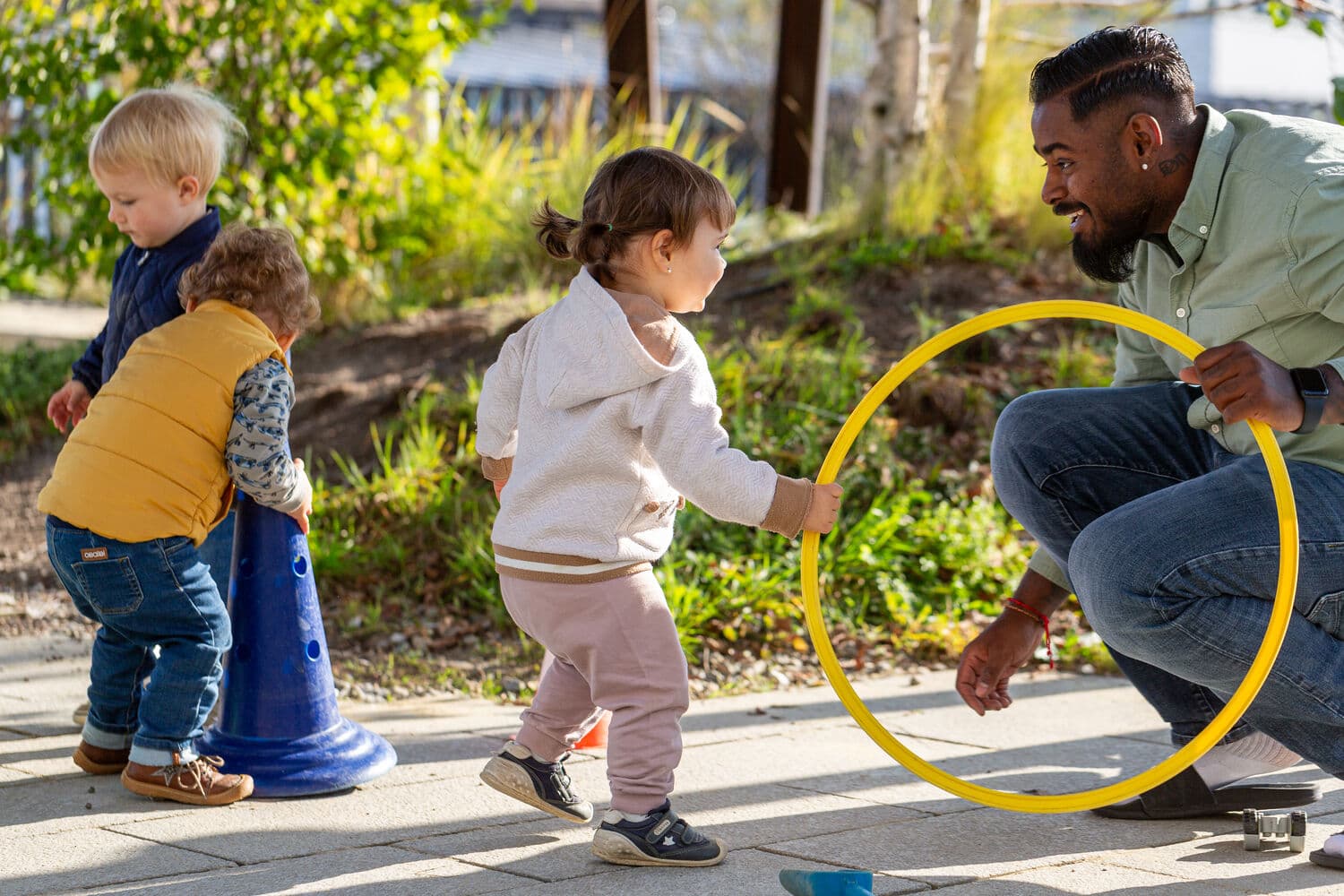
A nature-focused daycare — naturnah in German — has a strong outdoor emphasis with a regular indoor classroom as its base. In practice that means typically two to four hours outside per day, with the forest, neighbourhood park or a large garden treated as part of the learning space rather than as the recess area. The indoor part stays — sleep room, building corner, picture-book area, lunch kitchen — and acts as the anchor. That's the central distinction from a Waldkita (forest daycare), which is fully outdoor with only a small hut for shelter, and from a standard daycare with a garden, which spends maybe 30 to 60 minutes outside on a good-weather day.
The label matters because naturnah is not strictly defined and some daycares use the term loosely. On cost, the usual rules apply: in the city of Zurich, nature-focused daycares follow the city tariff model — typically CHF 130.– to CHF 160.– per day without subsidy, scaling with household income for subsidised places, with a floor around CHF 7.50 per day. If you specifically want a daycare with a large own garden in the city, work the hub directly — the distribution doesn't follow the usual inner-city / outer-city pattern, because big gardens sit in unexpected spots.
What "naturnah" actually means — and doesn't mean
The term nature-focused (or naturpädagogisch, or outdoor-oriented) describes a middle path. In the Swiss pedagogical spectrum it sits between the pure Waldkita on one side and the conventional indoor daycare with playground visits on the other. Pinned down: a real nature-focused daycare spends at least two hours daily outside, has regular forest or park visits in the daily plan, and its indoor space is built for the outdoor share — usually with a mud room or large wardrobe area where wet rain suits and dirty boots have a fixed place. The pedagogy integrates nature into learning: what the children find outside comes back into the classroom and gets processed there — leaves pressed, insects observed, weather charts kept together.
What naturnah doesn't mean: "we go to the playground daily" as the headline feature. A standard daycare with a garden typically spends thirty to sixty minutes outside, often as a transition between activities or as "free play" in the late morning. That's good but not naturnah. The threshold sits at the daily routine, the staff qualifications, and the indoor setup that actually supports the outdoor block.
Naturnah vs Waldkita vs standard daycare with garden
| Aspect | Standard with garden | Nature-focused (naturnah) | Waldkita | |---|---|---|---| | Outdoor time per day | 30–60 min | 2–4 hours | 6–8 hours | | Indoor base | Full group room | Full group room + mud room | Small hut or trailer | | Enrolment age | from ~4 months | from ~4–6 months | usually from 2.5 years | | Rain rules | mostly indoors | outdoors with gear | only severe storms shorten the day | | Pedagogy emphasis | broad, outdoors as break | nature integrated in curriculum | nature is the curriculum |
This table is an orientation, not a rigid classification. The reality is always a spectrum, and the most interesting houses often sit at the edges: a nature-focused daycare that runs five hours outside in summer and two in winter, or a Waldkita that ends deep-winter days at a partner indoor space.
Strengths and trade-offs
The strengths overlap heavily with those of a Waldkita: gross-motor development, independent risk assessment, sensory integration, weather literacy, and (per the literature) fewer respiratory infections than indoor-only daycares. To that the nature-focused house adds the indoor advantage: dedicated picture-book time, building corner, table work, longer naps, and clear shelter in extreme weather — all things a Waldkita has to improvise.
Trade-offs against the Waldkita: less outdoor depth, less unbroken nature experience, and at some houses a felt indoor-default on days when the weather would have allowed more outdoor. Trade-offs against the standard daycare: higher gear demands (especially rain gear and boots), higher staff qualification expectations (good naturnah pedagogy needs outdoor experience), and slightly more wardrobe organisation per child.
What this means for an expat family
A few practical points. Permits and timing: nature-focused houses tend to fill up in late winter / early spring as families plan for the new outdoor-friendly season. Apply at two or three houses in parallel. Gear cost: a full year of seasonal gear runs around CHF 400 the first year (rain suit, lined trousers, two pairs of boots, hat, mittens). Quality matters; cheap gear ends up in the bin within a season. International school transition: a nature-focused upbringing transitions cleanly into both Swiss state schools and international primary schools — the Steiner-aligned and IB-aligned internationals in particular value the experiential foundation. Language: most nature-focused daycares run in German with strong attention to spoken Swiss-German, which helps Kindergarten-readiness for the public system.
Who nature-focused suits
Nature-focused fits families who like the Waldkita idea but want to keep an indoor anchor for their child — whether because of infancy, a health sensitivity (mild asthma, eczema), or simply because the child needs more solidity during the settling-in. It fits families with multiple children at different ages who should stay at the same daycare (a Waldkita often only enrols from 2.5 years, which forces a switch for infants). And it fits as a transition: many families start with naturnah and move into a Waldkita at kindergarten age when the child is ready for full outdoor days.
A note on data classification
For full transparency: in our database, nature-focused and Waldkita houses sometimes appear under the same category because the distinction in practice is fluid. The list below shows outdoor-leaning daycares in the city that, in practice, more closely match the nature-focused profile — significant outdoor time, but with a real indoor classroom. When you visit, verify the daily outdoor hours directly with the lead.
Where to find a nature-focused daycare in Zurich


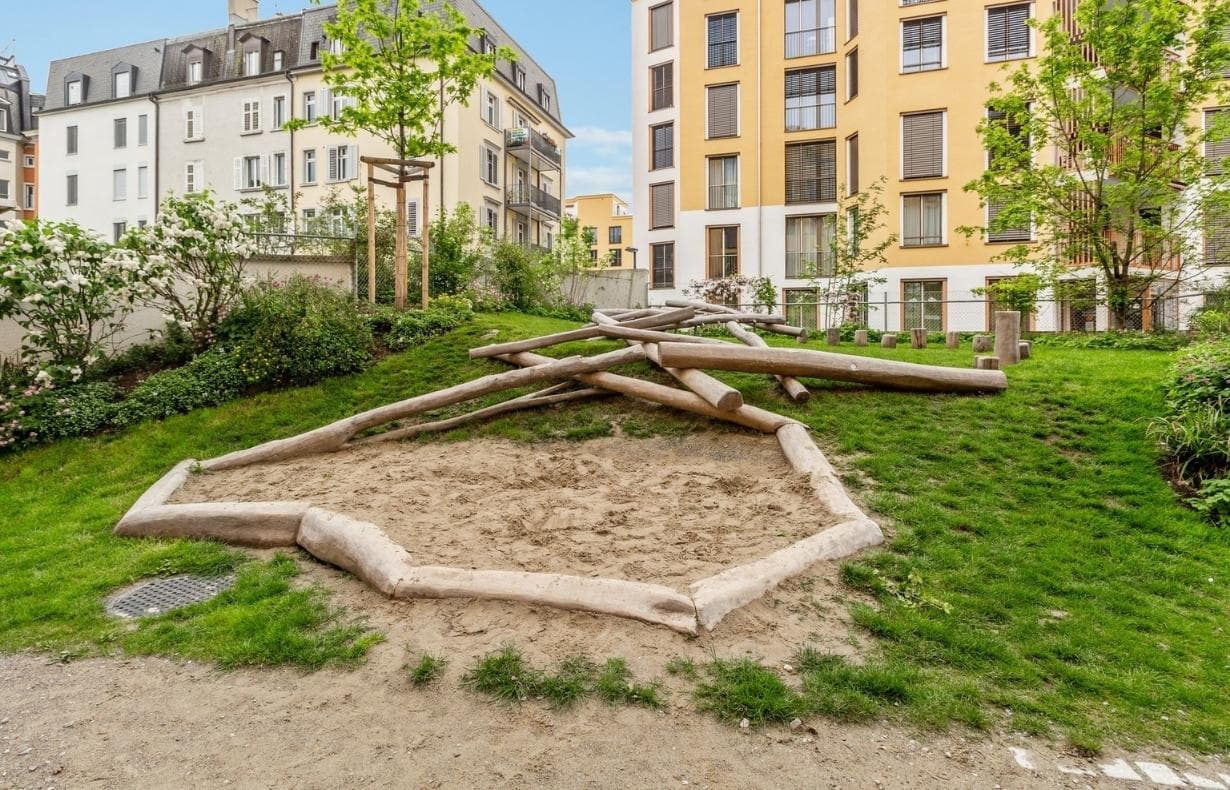

The full hub of every nature-focused daycare we track is at /en/zurich/pedagogy/nature_focused. To examine the full-outdoor variant, the Waldkita explainer is the companion piece. For daycares with specifically large gardens, the feature hub at /en/zurich/feature/outdoor filters on that one criterion.
Frequently asked questions
What's a nature-focused daycare?
A daycare with a strong outdoor emphasis — typically two to four hours per day outside — but with a regular indoor classroom as base. The forest, neighbourhood park or a large garden is part of the learning space, not just the recess area, but the child has an indoor anchor.
How is nature-focused different from a Waldkita (forest daycare)?
A Waldkita is fully outdoor with a small hut as base. A nature-focused daycare has an indoor classroom but spends significantly more time outside than a standard daycare with a garden. For infants, and for children who need an indoor retreat, the nature-focused setup is often the better fit.
What skills do children develop especially well there?
Gross motor control, independent risk assessment, weather literacy, sensory integration — and, according to recent studies, fewer respiratory infections than indoor-only peers. The indoor anchor still allows table work, building corners and quiet picture-book time.
How many outdoor hours per day counts as 'naturnah'?
Typically two to four hours, adapted to weather. Longer in warm conditions; shorter in heavy rain or extreme cold, with outdoor activities in sheltered spots. Verify per daycare — the term naturnah isn't strictly defined.
Is 'naturnah' just a marketing label?
Some operators use the term loosely. Real nature-focused houses have a mud room (a dedicated wardrobe for outdoor gear), a clear daily outdoor routine, and staff with outdoor-pedagogy training. If a daycare says 'we go out every day' without structuring how, ask follow-up questions.
Is nature-focused suitable for infants?
Yes, often better than a Waldkita. The indoor base allows for sleeping, nappy changes and shelter in extreme conditions — important for under-18-month-olds. Many nature-focused daycares enrol from four to six months, while Waldkitas often start at 2.5 years.
What does a nature-focused daycare cost in Zurich?
Tariffs follow the city model — typically CHF 130.– to CHF 160.– per day without subsidy. With city subsidy by household income, with a floor around CHF 7.50 per day at the lowest-income end. Pedagogy-based surcharges are uncommon; outdoor gear typically comes from the parents.
Next step
The full hub of every nature-focused daycare in the city is at /en/zurich/pedagogy/nature_focused. If you're still weighing nature-focused against a full Waldkita, the Waldkita explainer sits next to this post. For application logistics, the Zurich registration guide is the next read; for money-side specifics, the cost guide.
Keep reading
Bilingual daycare in Zurich — pros, cons, and the right age to start
Whether bilingual daycare is worth it, when to start, what OPOL really means, and which language pairs Zurich actually offers — for expat families weighing options.
What is a Waldkita? Forest daycare in Zurich, explained
How a Waldkita (forest daycare) works, what a typical day looks like in summer and winter, what children learn, and what expat parents in Zurich should know before applying.
What is a Montessori daycare? A guide for Zurich parents
How a Montessori daycare in Zurich works, what a typical day looks like, what it costs, and which children it suits — written for parents weighing pedagogies.