
Top 3 Bilingual Daycares in Zurich Kreis 4 (Aussersihl / Langstrasse)
Three bilingual daycares in Aussersihl, Werd, and Langstrasse — DE-EN immersion, multicultural Quartier, with notes on subsidies, waitlists, and B-permit timing.
If you've just landed in Zurich on a B-permit and you're looking for a bilingual daycare in Kreis 4 — Aussersihl with Werd, Langstrasse, or Hard — the supply is dense and multicultural. Aussersihl is one of the most international neighbourhoods in the city; the daycare scene reflects that. Most bilingual houses here run DE-EN, with a third or fourth language often present passively in the room — Spanish, Portuguese, or Turkish, depending on the family mix. The three picks below cover the Werd and Stauffacher corridor, all within a 10-minute walk of the Stauffacher tram knot. Without subsidy, daily rates run CHF 130.– to CHF 160.–, the standard Zurich band; with Stadt Zürich subsidy, the floor is around CHF 7.50 per day, and Kreis 4 has one of the higher subsidy uptake rates in the city. You don't need your B-permit in hand to apply — most expat families register before they arrive, alongside the apartment search.
The three picks

PLAYground education
PLAYground education in Werd runs a play-based DE-EN day. Werd is the quieter, family-oriented part of Aussersihl — off the Langstrasse axis, walkable to Sihlcity and Bahnhof Wiedikon. For expat families who want urban living without the bar-and-club soundtrack outside the door, Werd is the typical landing spot. The DE-EN line is integrated rather than scheduled; staff respond in whichever language the child uses. Expect a multi-month waitlist; apply 6–9 months ahead.

globegarden Stauffacher
globegarden Stauffacher sits directly at the Stauffacher transit knot — trams 2, 3, 8, 9, 14, plus bus links to Hauptbahnhof. For parents who live in Kreis 4 but work in the banking district or in the Industriequartier (Kreis 5), the location works as a classic commute hub. globegarden tends to handle English-language admin more reliably than smaller Quartier-rooted houses, which matters when contracts, parent newsletters, and emergency notes are routinely in German elsewhere. Several large Zurich employers (UBS, Swiss Re, Zurich Insurance) hold employer-quota places at globegarden — worth checking with HR if you work for one.
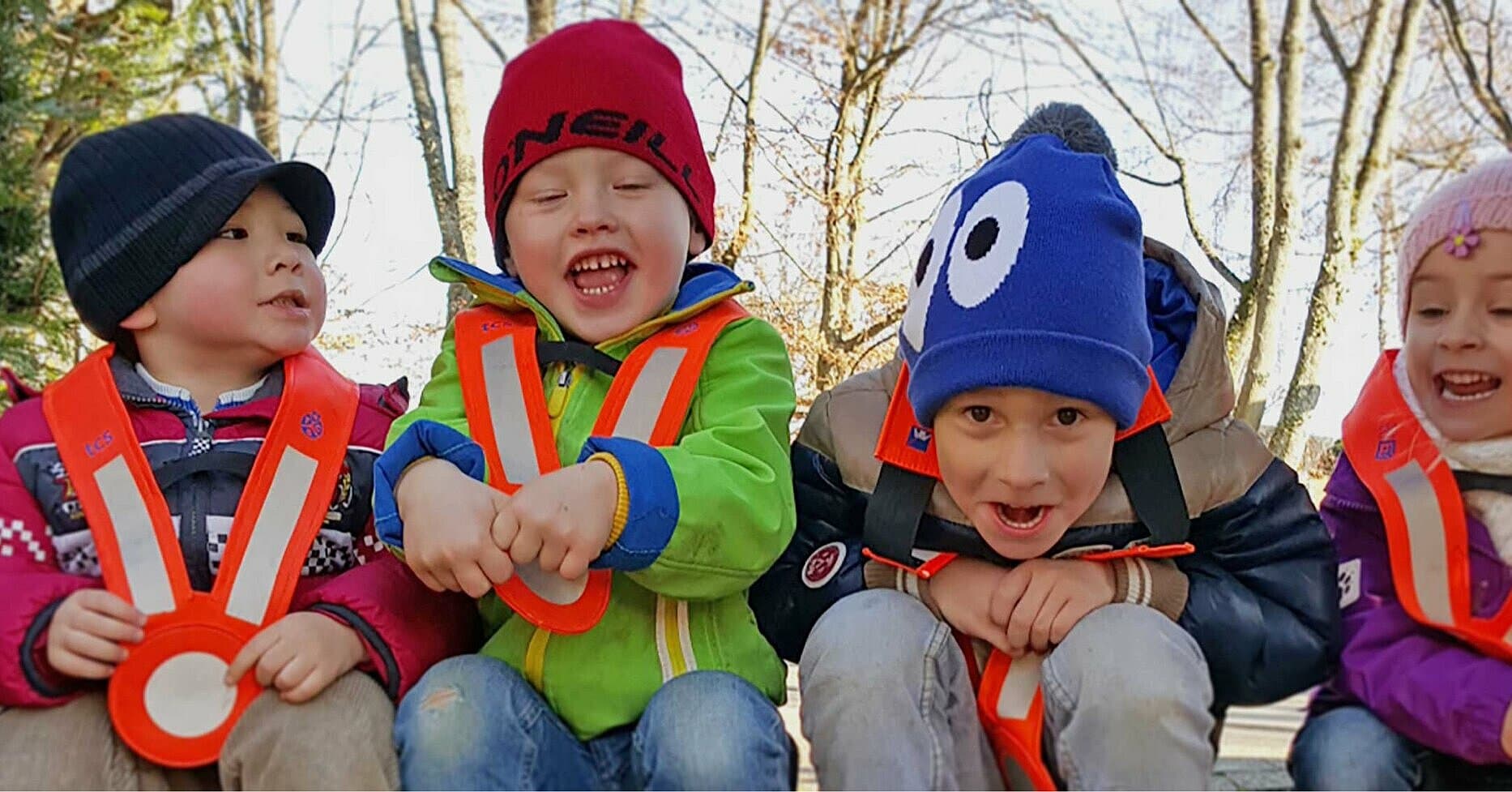
globegarden Wengistrasse
globegarden Wengistrasse rounds out the local cluster, slightly deeper into the Langstrasse Quartier. The pedagogical line is identical to the Stauffacher site; the difference is micro-location — a touch more Quartier soundscape, but shorter walk-times if you live directly in the Langstrasse corridor. The neighbourhood is unremarkable during daytime drop-off and pickup hours; the evening character is irrelevant for childcare logistics.
How they compare
| Field | PLAYground education | globegarden Stauffacher | globegarden Wengistrasse |
|---|---|---|---|
| CHF/day | 178 | – | – |
| Languages | de, en, it, es | de, en | de, en |
| Outdoor space | ✓ | ✓ | ✓ |
Daily rates cluster within the standard Zurich band; all three accept Stadt Zürich subsidies. The meaningful axis of difference is outdoor space — naturally constrained in dense Aussersihl — and micro-location. PLAYground in quieter Werd, globegarden Stauffacher at the transit knot, Wengistrasse deeper in the Quartier.
Where they sit on the map
All three houses are within a 10-minute walk of Stauffacher. Trams 2, 3, 8, 9, and 14 cover the Quartier densely; driving in is painful — Helvetiaplatz and Stauffacher are heavily traffic-calmed and parking is limited. Most Kreis 4 families do drop-off by tram, bike, or on foot.
Practical wrap-up
- Waitlist: Plan for 6–12 months at the established bilingual programmes. Smaller houses can be shorter.
- When to apply: Register 6–9 months before you want to start. If you're moving from abroad, apply alongside the apartment search — not after the B-permit lands.
- Subsidies: Strongly used in Kreis 4. Check each kita on kibon for whether it's enrolled and what your household-income tier would pay.
- Language bonus: Children in Kreis 4 often pick up a third or fourth language passively, just from the Quartier mix.
If Kreis 4 doesn't yield a match, look one ring out: Kreis 5 sits directly across the tracks with similar bilingual density and tech-employer co-location. For pedagogy background, see our bilingual daycare explained post; for the broader Zurich application sequence, finding a daycare spot in Zurich walks through the kibon mechanics.
Frequently asked questions
What daycares are available in Zurich Kreis 4 (Aussersihl / Langstrasse)?
Kreis 4 — Aussersihl with Werd, Langstrasse, and Hard — has a dense multicultural daycare scene. The post below covers three bilingual picks; the Kreis 4 hub page lists the full set.
What is a DE-EN daycare?
A DE-EN daycare runs the day in both German and English. Most Kreis 4 bilingual programmes alternate between the two languages naturally rather than splitting by group, with a third language often present passively (Spanish, Portuguese, Turkish) thanks to the Quartier's mix.
How safe is Langstrasse for families?
During the day, very ordinary — schools, shops, parks. In the evening the area around Langstrasse itself is loud and bar-oriented, which families typically navigate by living slightly off-axis (Werd, the eastern edge). Drop-off and pickup happen during ordinary hours, so this rarely matters in practice.
How much does a Kreis 4 daycare cost per day?
Without subsidy, full-time care in Zurich runs CHF 130.– to CHF 160.– per day. With Stadt Zürich subsidy, the rate scales with household income — the floor is around CHF 7.50 per day, the cap around CHF 130.–. Subsidy uptake is high in Kreis 4.
Do I need a B-permit before applying for a Kreis 4 daycare?
No, you can apply before your permit is finalised. Most established programmes have 6–12 month waitlists, so registering early — even before you arrive — is the standard expat playbook.
Is Kreis 4 a good fit for English-speaking expat families?
Yes, especially if you like urban living. The highest expat density is in Seefeld (Kreis 8); Hottingen (Kreis 7) is the second-densest. Kreis 4 is more multicultural-mixed than expat-concentrated.
Keep reading
Top 3 Bilingual Daycares in Zurich Kreis 1 (Old Town)
Three bilingual daycares in Zurich's Old Town — DE-EN immersion, central locations near ETH and Paradeplatz, with notes on waitlists, B-permit timing, and subsidies.
Top 3 Bilingual Daycares in Zurich Kreis 5 (Industriequartier)
Three bilingual daycares in Zurich's Industriequartier and Escher Wyss — DE-EN immersion near tech employers, with notes on extended hours, employer quotas, and waitlists.
Top 3 Bilingual Daycares in Zurich Seefeld (Kreis 8)
Three bilingual daycares in Seefeld, Mühlebach, and Weinegg — Zurich's highest expat-density Kreis, with notes on English admin, waitlists, and B-permit timing.